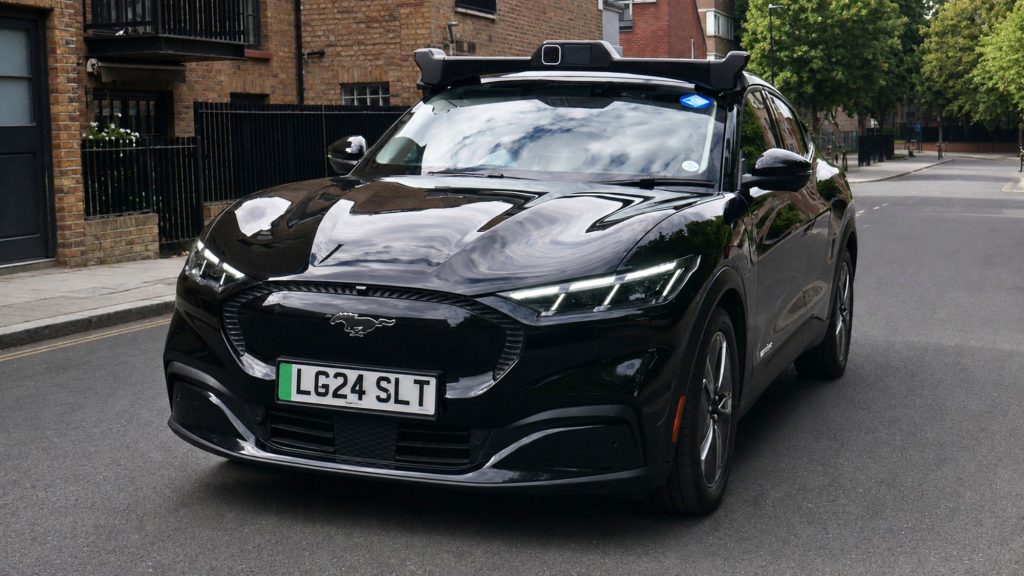
Driverless Cars in London will cause mayhem
Two years ago I stood on the CES show floor in Las Vegas, watching a Waymo glide round a junction with nobody behind the wheel. It felt like science fiction. Wide, grid-pattern roads, blazing sunshine, and a car making decisions all by itself.
Fast forward to 2026, and that same idea is landing on my doorstep. Uber has teamed up with British AI firm Wayve to bring robotaxis to London this summer and I can already see the carnage they will cause. Back-up traffic, blocked intersections and iPhone warriors capturing it all in slo mo!
Waymo has been quietly testing on our streets since last autumn, and Baidu’s Apollo Go is lining up too, working with Lyft and Freenow. The government has fast-tracked pilot schemes for spring 2026, with the full Automated Vehicles Act due to land in the second half of 2027.
Zoox is another company that we saw live on the streets of Las Vegas. This vehicle didn’t even have a steering wheel. It was like a ski gondola on wheels, and it seemed to work really well and I heard good reports on the efficiency.
So driverless cars going from a curiosity at a Vegas tech show to a real option for getting to Tesco. I didn’t make it to the London demo, but I’ve watched the footage back and had a good think about it. Here’s where I’ve landed.
USA vs UK roads: A world apart
The thing that struck me watching that Waymo in Nevada was how much space it had to work with. Wide lanes, right angles, predictable traffic, and drivers AND pedestrians who mostly stick to the rules. London is the opposite of that on every count. Our roads are largely still following routes laid down a hundred years or more ago, built for horses and carts long before anyone dreamt up a lorry, let alone a self-driving Uber. Narrow streets, blind corners, parked cars eating into a single lane, cyclists undertaking on the inside, pedestrians more interested in their 6 inch screen than looking left or righ. It’s not that the tech is bad. It’s that the Vegas test and the London test are two completely different exams.
Our traffic systems weren’t built with this in mind
It’s not just the roads themselves, it’s everything layered on top of them. Traffic light phasing, roadworks that pop up overnight, temporary diversions, the sheer improvisation that London driving demands every single day. A human can read a situation and make a judgement call in half a second. A system trained mostly on more orderly cities has a much bigger job to do here, and Uber’s own boss admitted London is “one of the world’s busiest and most complex urban environments” when announcing the trial.
Milton Keynes, maybe. Central London, not yet
If you want to see where this could work, look somewhere like Milton Keynes. Wide boulevards, roundabouts instead of tight junctions, a road network that was designed with structure and space in mind. That’s a far more sensible proving ground than trying to thread a driverless pod down a one-way Georgian side street with a skip on one side and a cyclist on the other.
The accountability gap bothers me
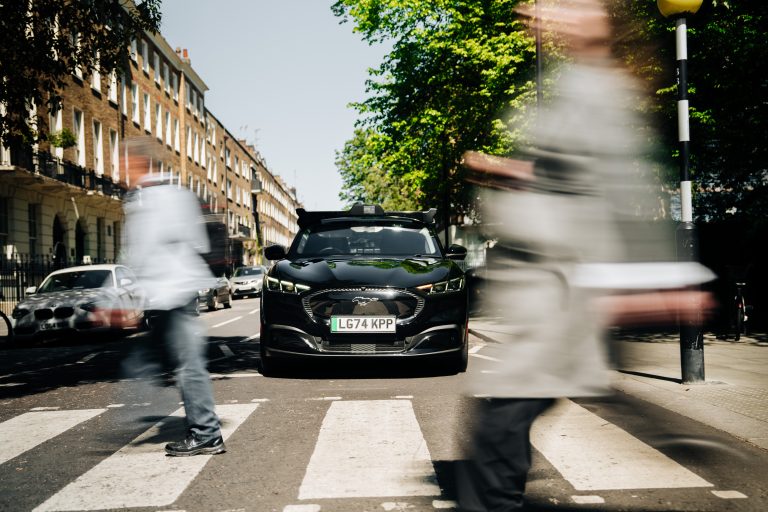
When a human driver messes up, there’s a person you can point to. A licence, an insurer, someone who has to answer for it. With an autonomous system, who’s actually responsible when it gets something wrong? The Automated Vehicles Act does set out a legal framework for this, putting liability on the “authorised self-driving entity” rather than a driver, but it’s still early days for how that plays out in practice on a live, chaotic London street. And it’s a big part of why, if I’m booking a cab, I’d rather have a human behind the wheel than a car booked through an app. It’s not really about Uber versus a black cab. It’s about having a person there who’s accountable for the journey, rather than a system.
Where the balance sits
To be fair to the other side of the argument, the safety case isn’t nothing. Government figures suggest the sector could add tens of billions to the economy and tens of thousands of jobs, and firms like Waymo have years of data from US cities to draw on. A recent Londonist piece found 42% of Londoners actively oppose driverless taxis, which means a majority don’t. People are clearly open to it. Human drivers get tired, distracted, and make mistakes too, and there’s a decent argument that a well-trained system removes a lot of that risk. I just think London’s roads, layout, and habits need a lot more proving out before I’d trust one to get my kids to school.
Over to you
Would you get in a driverless taxi in London tomorrow if you could? Or are you with me, happier with a human at the wheel for now?
Sources: CNN Business, Londonist, The Register, Time Out London, Gulf News, London.gov.uk Research Unit, Automated Vehicles Act 2024 (legislation.gov.uk), Mobile World Live, Burges Salmon.