
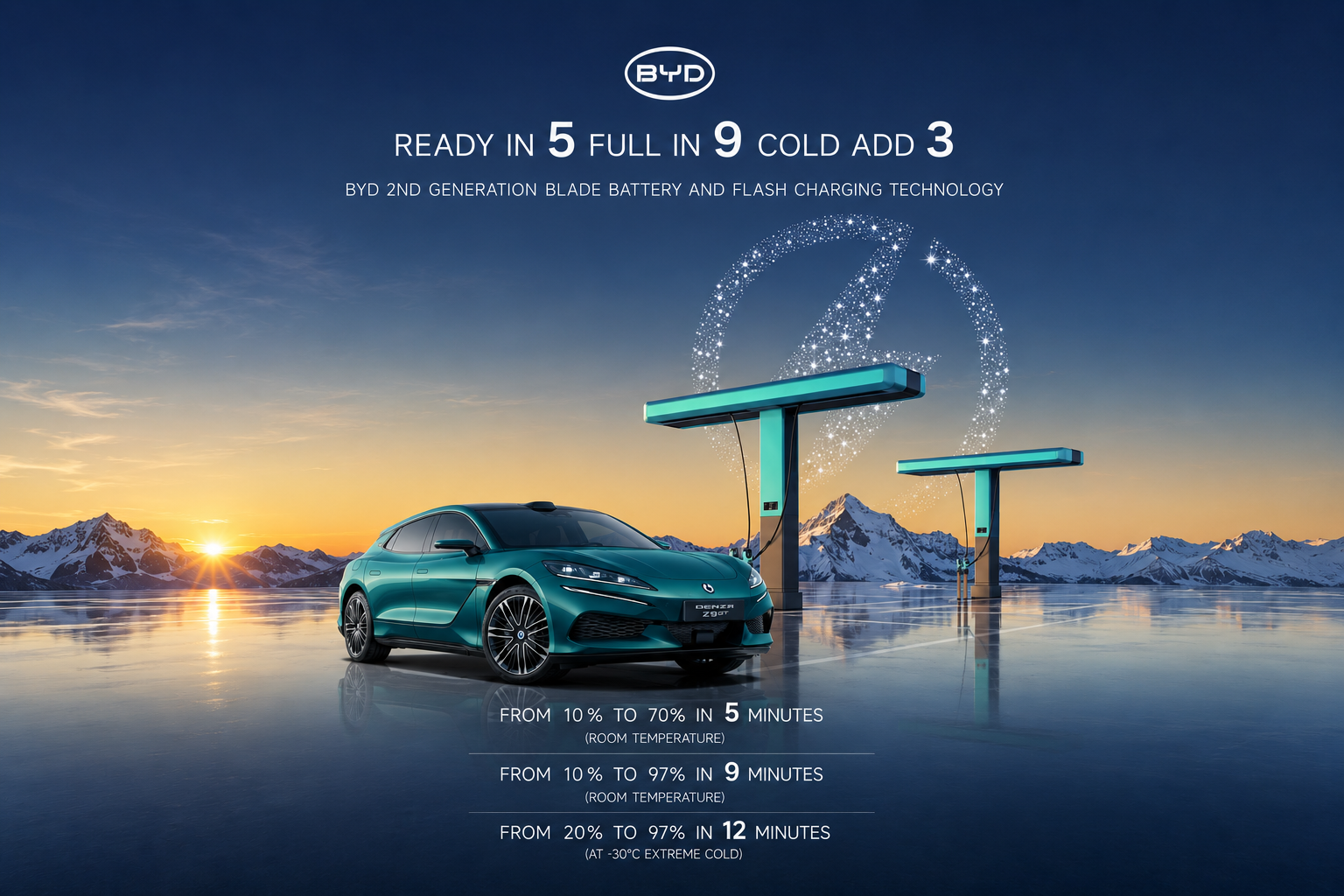
What is BYD Flash Charging?
BYD Flash Charging is an ultra-high-power EV charging system delivering up to 1,500kW through a single CCS connector – more than three times faster than the current UK rapid charging standard. It uses on-site battery storage to bypass grid connection delays, allowing a compatible vehicle to charge from 10% to 97% in under nine minutes. The first UK unit went live in June 2026.
What is BYD Flash Charging and Why Does it Matter?
The holy grail of electric vehicle ownership has always been simple: make charging feel like a petrol stop. BYD may have just delivered it.
The first BYD Flash Charger in the UK went live in June 2026, delivering a peak output of 1,500kW – three times the power of Tesla’s fastest V4 Supercharger. For context, the most powerful ultra-rapid chargers currently available in the UK top out at around 400kW. BYD’s Flash Chargers offer more than triple that output through a single connector.
The system runs on a mantra that tells you everything you need to know:
Ready in 5. Full in 9. Cold Add 3.
In practice: a 10-70% charge into a large 122kWh battery takes five minutes. A full charge to 97% takes nine. Even at -30 degrees Celsius, cold weather adds only around three minutes to the total.
For UK EV drivers, this is not an incremental upgrade. It is a category shift.
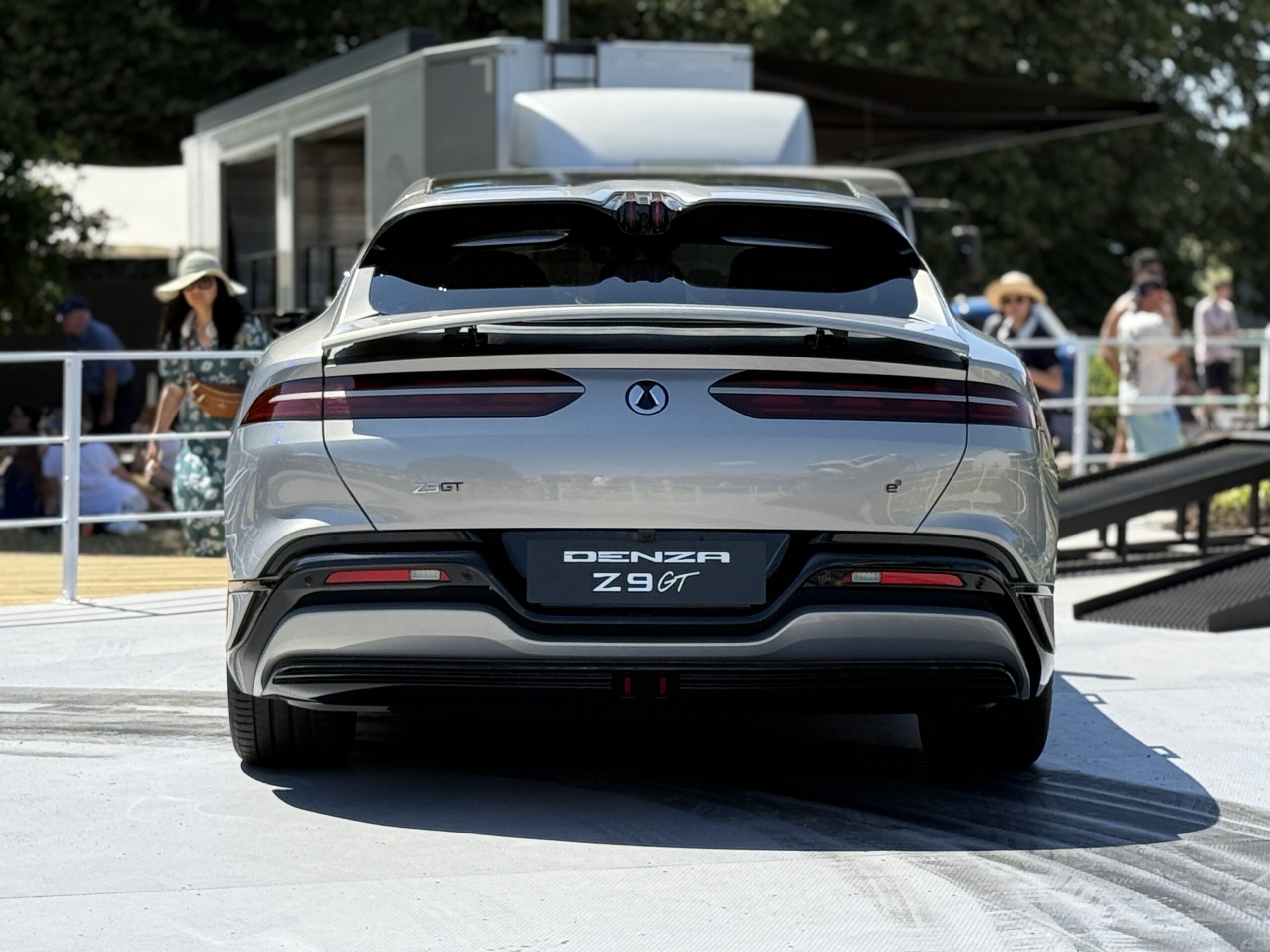
It’s so exciting to see FLASH Charging working in the UK for the first time, because it truly is game-changing tech. The cars capable of FLASH Charging, like the DENZA Z9 GT, take a similar time to charge as it takes to fill up an ICE car with petrol or diesel, which has been impossible until now. It’s a proud moment for me, not just because BYD is the first manufacturer in the world that’s got the know-how to bring this tech to market, but because it’s the latest milestone on a road showing just how far BYD has grown in the UK in such a short space of time.
Steve Beattie, BYD.
How fast is BYD Flash Charging?
BYD Flash Chargers deliver 1,500kW of power – enough to charge a compatible vehicle from 10% to 70% in five minutes, and to 97% in nine minutes. Even in extreme cold of -30 degrees Celsius, the total charge time increases by only around three minutes.
Can any EV use a BYD Flash Charger?
Yes. BYD Flash Chargers use the standard CCS connector found on almost every EV on sale today, and the network is open to all brands. However, a vehicle’s own hardware caps its maximum charging speed. Plug a non-compatible EV into a 1,500kW Flash Charger and it will still charge at the car’s own maximum rate, not BYD’s.
Which cars support 1,500kW BYD Flash Charging?
Only vehicles fitted with BYD’s Blade Battery 2.0 can take full advantage of Flash Charging speeds. For now, the Denza Z9GT is the first UK-bound model that supports it, though the technology is expected to filter down into BYD’s wider range over time.
How many BYD Flash Chargers will there be in the UK?
BYD is targeting 300 Flash Chargers across the British Isles by the end of 2027, as part of a wider 2 billion euro European investment targeting 3,000 stations continent-wide.
How much will BYD Flash Charging cost?
BYD is targeting 50 pence per kWh for drivers – around 30p less than the rate currently charged by most rapid charging operators. Denza Z9GT buyers will also receive 18 months of free charging across the European network.
How Does BYD Flash Charging Actually Work?
The speed is impressive. The engineering behind it is where things get seriously interesting.
Delivering 1.5 megawatts to a charger from the national grid normally requires a costly, time-consuming grid upgrade. As Bono Ge, BYD’s UK Country Manager, explained: “If you want to deliver one megawatt, you have to upgrade the power grid, which probably would take us at least 12 months.”
BYD’s solution sidesteps that bottleneck entirely.
Each Flash Charger is paired with two on-site storage batteries providing four megawatts of buffer capacity in total.
The efficiency gains are significant. Traditional charging stations operate at a grid utilisation rate of around 5%, leaving electrical infrastructure largely idle. BYD’s integrated storage system raises that to 95%, reducing station construction costs by around 60% and removing the need for costly municipal grid expansion.
That approach opens up locations that would previously have been off the table for high-power charging: suburban retail parks, motorway services, rural stops – anywhere that could not secure a high-voltage grid connection fast enough or affordably enough to make it viable.
Is It Open to All EVs?
Yes – with one important caveat.
Unlike Tesla’s Supercharger network in its early days, the Flash Charging network is not exclusive to BYD or Denza owners. Regulatory requirements mean the network must remain open to all.
Diego Pareschi, BYD’s Flash Charging Director, was clear on this point: “Our overall mission is to enable the transition to clean-air technologies.” The network uses the standard CCS connector, so any EV can plug in.
The catch is straightforward: each car charges at its own hardware limit. A vehicle without Blade Battery 2.0 will benefit from a fast, reliable charge – just not at the full 1,500kW ceiling. For most current EVs, that still means a meaningfully faster experience than the majority of UK rapid chargers can deliver today.
The UK Rollout: What to Expect
BYD is not treating this as a pilot programme. The infrastructure investment is serious, the timeline is aggressive, and the commercial logic is clear.
The rollout begins with BYD’s existing UK dealer network of 144 stores, with around 35 to 40 already suitable for the high-power chargers. Beyond dealerships, BYD is partnering with existing charge point operators to accelerate deployment using established grid connections.
Bono Ge acknowledged the commercial tension this creates: “The main challenge is reaching commercial agreements, because in some ways we would become competitors. At the same time, we would bring significant traffic to their sites.”
Key rollout figures at a glance:
- 300 Flash Chargers targeted across the British Isles by end of 2027
- 3,000 stations planned across Europe as part of a 2 billion euro investment
- Each station costs between 500,000 and 1 million pounds to install
- 50 pence per kWh target price for drivers – around 30p below current rapid charging rates
- 18 months free charging included for Denza Z9GT buyers
- Network branding will be Flash Charging, not BYD or Denza
What This Means for the UK EV Market
Range anxiety gets most of the headlines. But charging anxiety – the fear of a 45-minute wait at a motorway service station – is the bigger blocker for mainstream adoption right now.
Flash Charging removes that objection in one move. When charging takes the same time as a petrol stop, the last meaningful psychological barrier to EV ownership starts to fall away.
“The future of EV adoption isn’t just about vehicle range, it’s about charging convenience. Flash charging represents a major step forward, bringing us closer to a world where charging an EV can be as quick and effortless as stopping at a fuel station.
“By significantly reducing charging times, it has the potential to remove one of the final barriers to EV adoption and help accelerate the transition to electric motoring.”
Shane Pither, Head of Select Electric, Select Car Leasing
The competitive dimension is equally significant. Legacy European manufacturers have invested in charging infrastructure through joint ventures like Ionity – but BYD’s 2 billion euro commitment dwarfs most individual automaker investments in European charging infrastructure. This is a company with 30 years of battery manufacturing behind it, deploying that expertise at network scale.
The questions worth watching in the months ahead: how quickly BYD can execute against permitting and grid connection realities, when Blade Battery 2.0 technology reaches more affordable models, and how existing charge point operators respond to a well-funded new entrant offering meaningfully lower per-kWh pricing.
One thing is certain. The bar for what EV charging should feel like in the UK just got reset.