It’s one of the most common questions people ask when they’re EV-curious:
“Yeah, but can a small electric car actually do a long road trip?”
So instead of answering it in theory, we decided to test it properly.
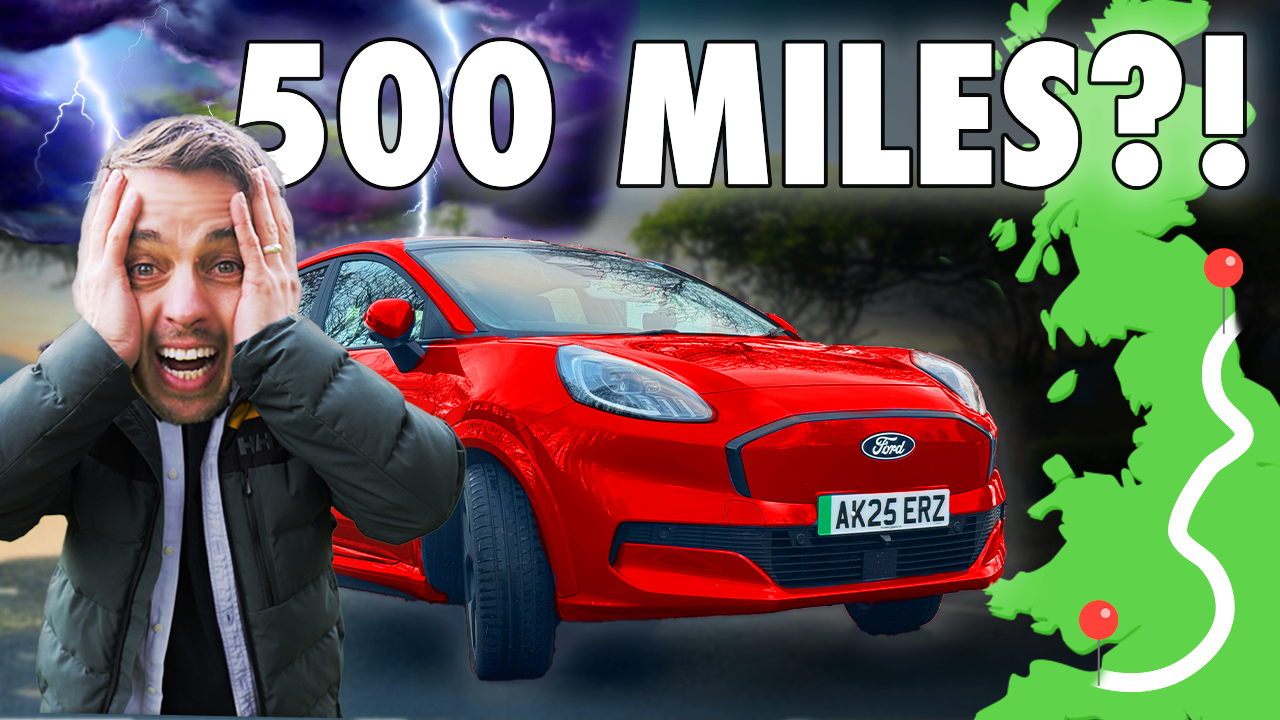
We took Ford’s smallest electric car, the Puma Gen-E, on a two-day, 500-mile UK road trip in about the worst conditions you’d choose if you were trying to make an EV struggle – cold temperatures, heavy rain, long motorway stretches, tight schedules and a boot full of filming gear.
No ideal temperatures.
No gentle B-roads.
No special treatment.
Just real life.
Why this test actually matters
Most EV range tests don’t reflect how people actually drive. They’re often done:
- In mild weather
- On mixed roads
- With minimal load
- And plenty of time to plan
But if you’re a family, a small business owner, or someone who just needs their car to work, your EV doesn’t get those luxuries.
This test was about answering the real question behind the clicks:
> Can a small electric car realistically replace a petrol car for long UK journeys?
The setup: expectations vs reality
On paper, the Ford Puma Gen-E isn’t designed to be a long-distance hero. It’s compact, efficient, and aimed squarely at everyday driving such as school runs, commutes, weekend trips.
We knew before we started that:
– Motorway speeds would hurt efficiency
– Cold weather would reduce usable range
– Rain and wind would increase energy consumption
And yet, this is exactly the environment many drivers face for half the year in the UK.
Practicality test: will everything actually fit?
Before range anxiety even enters the picture, practicality matters.
If a car can’t carry:
- luggage
- work equipment
- kids’ stuff
- or, in our case, camera gear
then the trip is over before it begins.
Despite appearances, the Puma Gen-E passed this test comfortably. The deep boot and clever under-floor storage swallowed everything we threw at it. What looks like a small car on the outside feels far more usable in real life.
This is a key point that often gets overlooked:
small electric cars don’t have to feel compromised.
Driving long distance in a small EV: what it’s actually like
Once on the motorway, the Puma settled into a rhythm quickly.
Over long stints behind the wheel, what stood out wasn’t any one flashy feature — it was how undramatic the experience was.
In a good way.
- The driving position is comfortable for hours at a time
- The displays give you exactly the information you need, without distraction
- Heated seats and steering wheel make a massive difference in winter
- Driver assistance reduces fatigue on long motorway sections
It doesn’t feel like you’re “making do” because it’s a small EV. It feels like a car doing exactly what it was designed to do.
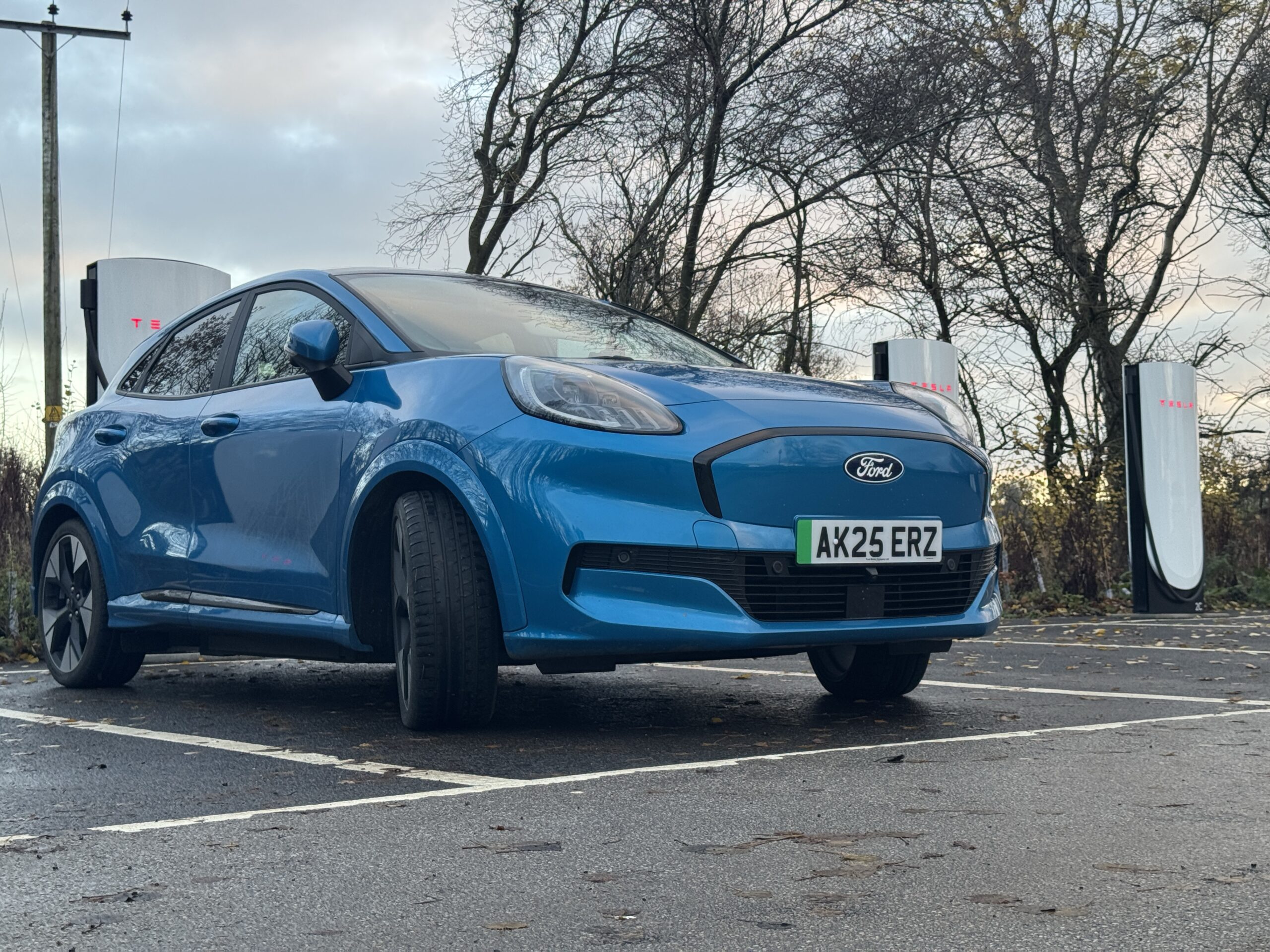
Charging on a long trip: where most doubts live
This is the part that worries people most — and understandably so.
Public charging in the UK isn’t perfect. Anyone pretending otherwise isn’t being honest. But it’s also nowhere near as bad as social media would have you believe.
The key difference between a smooth EV road trip and a stressful one comes down to planning and flexibility.
We leaned heavily on Zapmap throughout the journey to:
- Identify reliable chargers ahead of time
- Check availability before committing
- Compare charging speeds and networks
- Pay easily using the Zapmap card
Not every charging stop was flawless — and that’s important to say — but when we landed on the right chargers, the Puma Gen-E’s fast-charging capability meant stops were short enough to blend naturally into breaks we needed anyway.
Coffee, toilets, snacks.
The car charges while you live your life.
Fast charging vs big batteries: a mindset shift
One of the biggest misconceptions about EVs is that more battery automatically means better road trips.
In reality:
- A smaller battery that charges quickly can be easier to live with
- You spend less time waiting for that last 20%
- Stops are shorter but more frequent — and often better timed
The Puma Gen-E proved this point repeatedly. Even when conditions weren’t in its favour, charging speed helped it recover quickly and keep the journey moving.
Overnight charging: the EV advantage people forget
This is where EVs quietly outperform petrol cars.
After day one, we plugged in overnight on a slow, inexpensive charger. No rushing. No standing around. No wasted time.
We woke up to:
- A full battery
- And a stress-free start to the second day
It’s a small thing, but on a multi-day trip it makes a huge difference — and it’s something combustion cars simply can’t replicate.
The return leg: real-world complications
Day two didn’t go perfectly — and that’s kind of the point.
Colder weather reduced range further.
Rain increased rolling resistance.
A missed charging opportunity at our filming location forced an extra stop.
None of this ruined the trip — but it did test our planning.
And that’s where good tools and realistic expectations matter. With fast charging available and clear information about where to stop next, the journey stayed manageable rather than stressful.
By the end:
- 555 miles completed
- Over 11 hours of driving
- Strong efficiency given the conditions
- Range still left in the battery
EV road trip top tips (earned the hard way)
If you’re planning a long journey in an electric car — especially a smaller one — these lessons are worth taking seriously:
1. Plan charging options, not just destinations
Know where you *can* charge, not where you *must* charge. Flexibility removes anxiety.
2. Motorway speed makes a bigger difference than you think
Dropping a few mph can save meaningful energy over long distances.
3. Winter driving needs a buffer
Cold weather affects range. Build in contingency and you’ll never feel rushed.
4. Overnight charging changes everything
Even slow charging can reset the day and remove pressure.
5. Efficiency + fast charging beats raw battery size
Especially for UK journeys with regular stops.
The verdict: is a 500-mile road trip realistic in Ford’s smallest EV?
Yes — as long as you understand how EVs actually work.
The Ford Puma Gen-E proved itself to be:
- Genuinely practical
- Comfortable over long distances
- Efficient in tough conditions
- Easy to live with on the road
It won’t replace a long-range motorway cruiser for everyone. But for the vast majority of real UK driving, it shows that small electric cars are far more capable than they’re given credit for.
And that’s the real takeaway:
The problem isn’t small EVs — it’s outdated expectations.
If you’ve done a long EV road trip, or you’re thinking about trying one, let us know. And if there’s a challenge you want us to put another electric car through, we’re always up for it ⚡🚗