I had a call last night from a long term Tesla Y driver who is agonising over his next car. Top of his list was the Polestar 4. As a long term Tesla owner Jonny Berry from the EV Cafe is at a cross road is at a crossroads, so we thought we’d break it down for anyone at a similar junction.
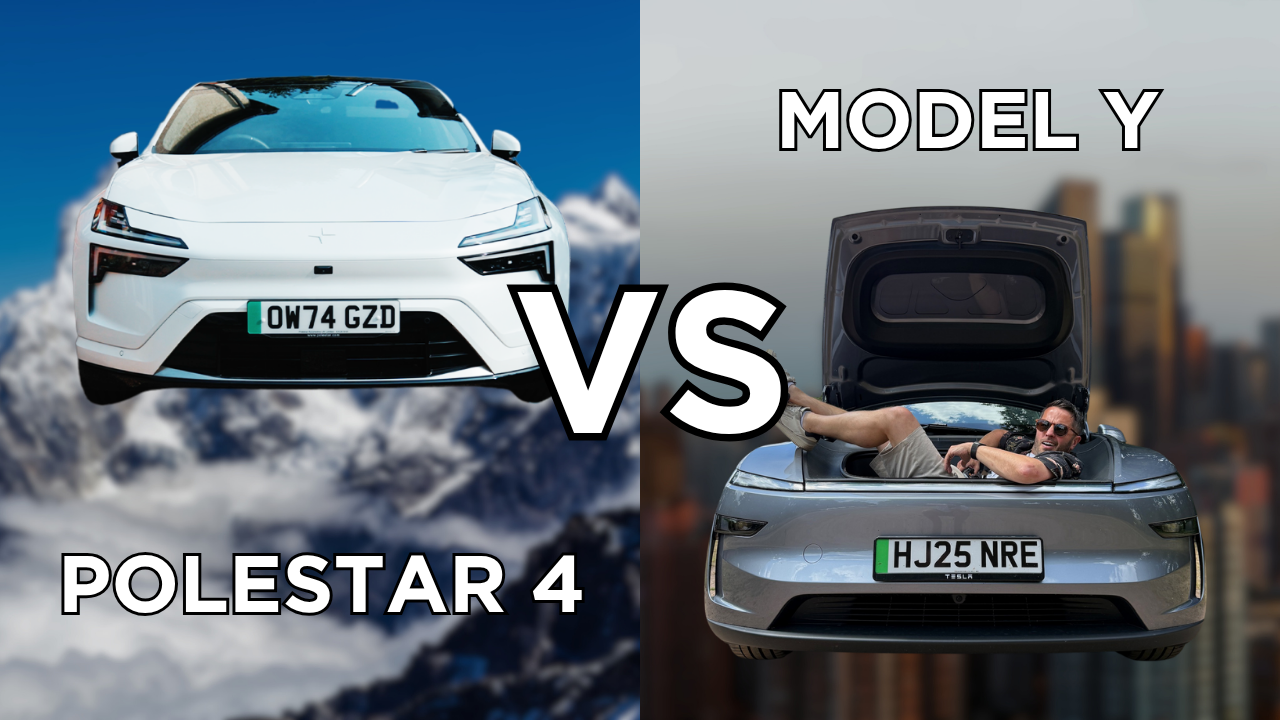
When we talk about electric SUVs, two names immediately dominate the conversation: Polestar 4 and Tesla Model Y Performance. Both promise premium performance, long range, and future-ready tech – but in very different ways.
I’ve driven both. I took the Polestar 4 all the way to the Alps, tackling mountain passes and high-altitude hairpins. And I cruised the Tesla Model Y Performance along the south coast, where the comfort, space and simplicity made a family camping trip feel almost effortless.
Here’s how they really compare from behind the wheel, not just on the spec sheet.
Design & First Impressions
Polestar 4: The EV That Turns Heads (and Corners)
The Polestar 4 is a statement piece. With its coupé-like roofline, wide stance and minimalist Scandinavian design, it feels more like a concept car that accidentally escaped a motor show.
It’s lower than you’d expect for an SUV, giving it that sporty, planted look. The front end is sharp, the lighting is futuristic, and the lack of a rear window yes, really, makes it one of the most distinctive cars on the road. (Don’t worry, the digital rear-view camera more than makes up for it.)
Tesla Model Y Performance: Familiar, but Smarter
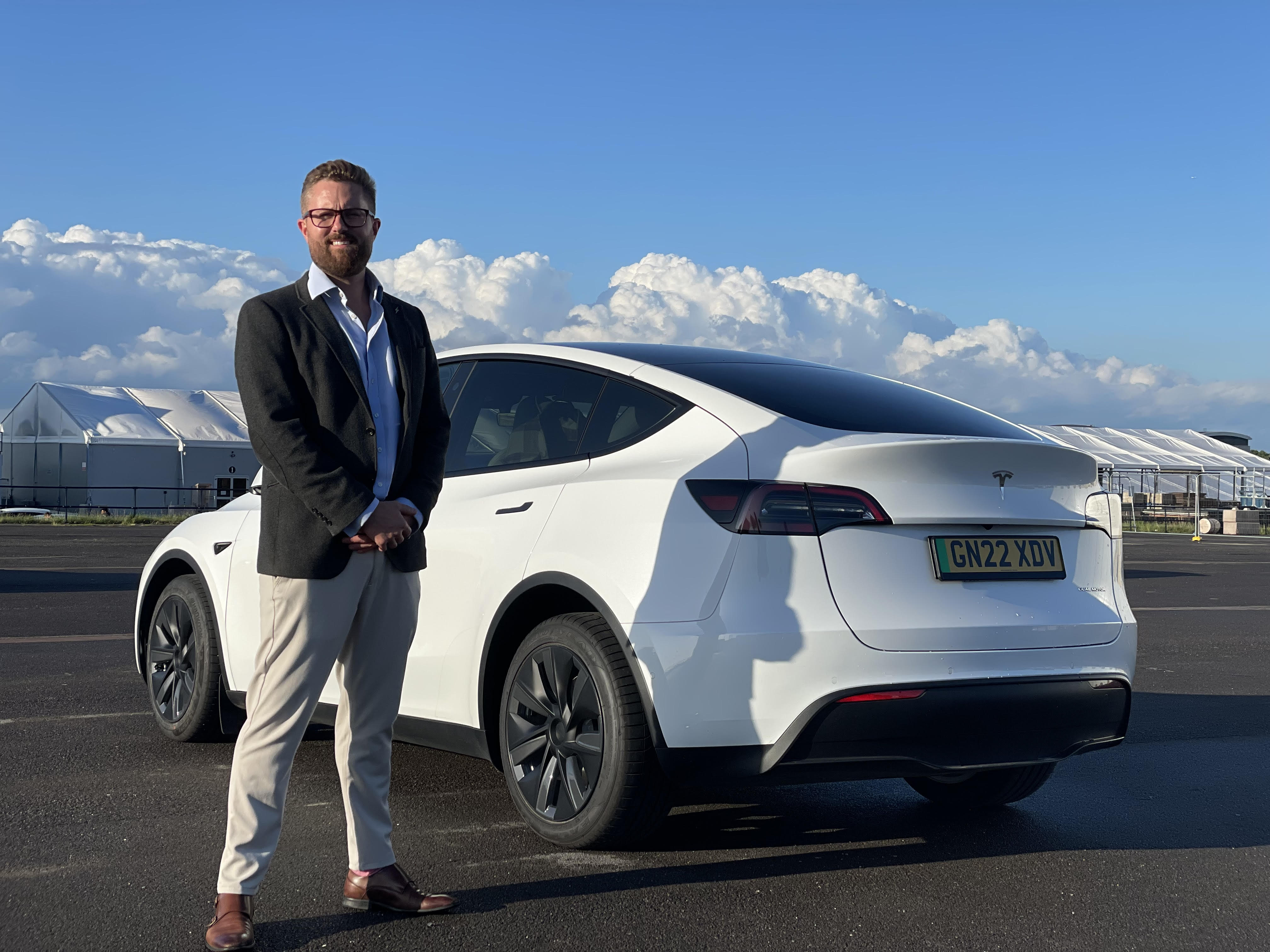
The refreshed Tesla Model Y Performance keeps Tesla’s clean, tech-driven aesthetic, but introduces a handful of subtle updates including new lights, improved sound insulation, a revised interior layout and better materials.
It’s still instantly recognisable with the sleek egg-shaped silhouette but Juniper feels more refined. Think Model Y 2.0: less bare, more comfort.
On the south coast run, it felt like a confident evolution of one of the UK’s best-selling EVs, quietly sophisticated, and very easy to live with. A firm favourite with the kids who were blown away by the amount of games and tech to keep them entertained while charging.
Performance & Handling
Polestar 4: Fast, Focused, Fun
The Polestar 4 delivers a serious punch. The dual-motor version produces up to 400 kW (536 bhp), launching from 0–62 mph in around 3.7 seconds. That’s supercar-quick in a family-sized EV.
But it’s not just about the numbers. On my Alpine route, the low centre of gravity and nearly three-metre wheelbase made it feel incredibly composed through tight corners. Even on rougher surfaces, the chassis stayed taut without feeling harsh.
It’s the kind of EV that makes you want to take the long way home. Polestar turns heads, puts a smug grin on your face, and handles every corner like it’s on rails.
Tesla Model Y Performance: Effortless and Efficient
The Model Y Performance’s performance feels more measured but equally impressive. The Long Range AWD version covers 0–62 mph in about 3.3 seconds, with instant torque and the trademark Tesla smoothness that will have your passengers gripping the arm rest and checking their underwear.
What stands out most is its efficiency. Even on motorway stretches and coastal climbs, I easily achieved over 300 miles of real-world range – a reminder that Tesla still leads the game when it comes to battery management. Coupled with the Tesla Super Charger Network, which rocks my world.
It’s less of a driver’s car than the Polestar 4, but more of a family all-rounder. Smooth, smart, and effortless.
Tesla’s advantage here is simple: infrastructure. The Supercharger network remains unmatched for reliability and coverage. You plug in, grab a coffee, and it just works. If you have a home charger, this may be less of a deal breaker for you.
Polestar relies on the wider CCS network, which has come a long way, especially with top apps like Zapmap simplifying access and payment. But, it’s still not quite as seamless as Tesla’s ecosystem.
On my Alpine trip, the Polestar managed well with rapid chargers en route, averaging around 30 minutes to 80%. But on convenience alone, Tesla wins.
| Feature | Polestar 4 | Tesla Model Y Performance | |
| Official WLTP Range | Up to 385 miles | Up to 360 miles | |
| Real-World Range | ~340 miles (Although we achieved 384 driving back from the Alps) | ~278 miles | |
| Battery Capacity | 94 kWh usable | 75 kWh usable | |
| Max DC Charging Speed | 200 kW |
250 kW (Supercharger V3) |
|
| Charging Network | 250 kW (Supercharger V3) | Tesla Supercharger network (expanding to non-Teslas) |
Interior, Tech & Practicality
Polestar 4: Premium Minimalism
Inside, the Polestar 4 feels like stepping into a high-end design studio. Recycled materials, vegan leather, soft ambient lighting, and a stunning 15.4-inch infotainment display powered by Google is futuristic and functional.
The front seats are superb, with a supportive shape that kept us comfortable for hours through Alpine switchbacks. Rear passengers get plenty of legroom, although headroom is slightly tighter than in the Model Y due to that sloping roofline.
Boot space? A generous 526 litres, expanding to 1,536 litres with seats folded enough for a family holiday, though not quite as cavernous as Tesla’s. And no ski or snowboard hatch, which was disappointing.
Tesla Model Y Performance: Space and Simplicity
The Model Y’s interior has been given a welcome glow-up in the Juniper refresh. Better materials, improved soundproofing, and a new ambient lighting strip make it feel even more premium than before.
But it’s still unmistakably Tesla: minimalist, touchscreen-led, and incredibly practical. With 854 litres, around 2,000 litres with the rear seats down (plus a sizeable frunk), it’s the most family-friendly of the two.
Tesla’s interface remains one of the best for sheer integration with the maps, energy use, music and climate all feeling effortlessly joined up.
Polestar’s infotainment might look slicker, but Tesla’s ecosystem – from over-the-air updates to route-based charging suggestions remains second to none.
Driving Experience: Alps vs Coast
There’s something poetic about testing two EVs in completely different environments.
In the Polestar 4, the Alps became a playground. Tight bends, steep climbs, long descents the Polestar thrived on it all. The car felt alive, precise and connected. Regenerative braking was smooth and predictable, and despite its power, the efficiency was surprisingly solid. Especially going down hill!
In the Model Y Performance, the south-coast route played to its strengths: relaxed cruising, easy access to Superchargers, silent motorway miles. It’s a car that makes every journey simple and exciting, depending on your passengers.
One is a driver’s EV, the other a family-friendly tool for covering big distances with zero stress. But both tick a lot, if not all, of my boxes.
Value, Price & Ownership
At the time of writing:
- Polestar 4 Long Range Dual Motor starts around £67,000, depending on trim.
- Tesla Model Y Performance is starting at £61,990.
So, yes the Polestar commands a premium. But you feel it in the craftsmanship, materials and sense of exclusivity.
Tesla, meanwhile, offers strong resale value, over-the-air updates, and a proven service ecosystem, factors that matter hugely for first-time EV buyers.
Polestar is catching up fast with digital service booking and remote diagnostics, but Tesla’s years of head start still count for something.
| You’ll love the Polestar 4 if… | You’ll love the Tesla Model Y Performance |
| You enjoy driving and want an EV with real character. | You value practicality, space and simplicity. |
| Design matters, you want something less common on UK roads. | You want the best charging network and easy ownership. |
| You appreciate a premium cabin and refined details. | You prefer an intuitive, tech-led interface and strong efficiency. |
In short:
- The Polestar 4 feels special and is a genuine alternative to traditional luxury brands.
- The Tesla Model Y Performance feels sorted being mature, convenient, and perfectly optimised for the everyday EV driver.
If you’re switching from petrol for the first time, the Model Y is the logical, confidence-boosting choice.
If you already “get” EVs and want something more emotional, the Polestar 4 delivers that spark.
Final Thoughts
After driving both across stunning landscapes from the snow-kissed Alps to the sun-soaked south coast, one thing’s clear: EVs have grown up.
The Polestar 4 shows that electric cars can be beautiful, fast and engaging. The Tesla Model Y proves they can also be easy, reliable and family-friendly.
It’s less about rivalry, and more about evolution. The fact that we can have this debate at all shows how far we’ve come. Jonny Berry, if you’re still reading, I hope this helps… If not… Try tossing a coin and let me know what you HOPE it lands on!
Whichever one you pick, the planet and your driving experience will thank you.
Takeaways
Polestar 4: premium design, thrilling drive, less practical
Tesla Model Y Performance: spacious, efficient, seamless ecosystem
Both represent the best of modern EV innovation, choose your flavour!
For more EV insight and EV adventure inspiration, remember to check out the Sustainable Dad YouTube channel. We’re on all the socials as well. Even the TikTok!